Tag: Kuwait

Filter By:
Sort By:
Inside INTOSAI
Inside INTOSAI
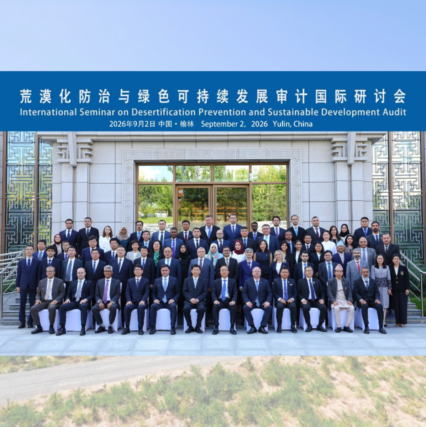
International Seminar on Desertification Prevention and Sustainable Development Audit Held in China
October 24, 2026
Digital Governance and Technological Innovation in Performance Audits

The field of performance audit is transitioning from manual retrospective evaluations to real-time and prospective analysis due to the infiltration of technologies such as Big Data, artificial intelligence (AI) and predictive modelling, that is reshaping the efficiency and effectiveness of the audit function. As public institutions increasingly rely on data-driven systems for decision making, the complexity of governance frameworks also increases emphasizing the need for greater scrutiny of such institutions to strengthen transparency, accountability and public trust (Agostino, Lourenco & Jorje, 2025). Digital transformation has proliferated across both public and private sectors, resulting in the generation of enormous volumes of structured and unstructured data that cannot be effectively analysed using conventional audit approaches alone (Basuki, Atarwaman & Layn, 2025). Hence, the need for innovation in performance audit has become more prominent than ever, calling for the development of new tools and techniques to match the dynamics of modern information ecosystem.

Financial Audits and Mechanisms for Good Governance of Public Funds: Promoting Accountability, Transparency, and Citizen Trust through Oversight and Best Practices

Good governance depends on the efficient and transparent management of public funds. Financial audits and oversight mechanisms have become increasingly important as public trust is closely tied to financial accountability. These audits and mechanisms have two main purposes: detecting and preventing corruption and mismanagement, as well as promoting transparency and strengthening institutions to deliver tangible benefits to citizens.

Auditing Climate Change: Impact, Risk, and Resilience

The threat of climate change looms large in today’s world of rapid global change, altering the social, economic, and environmental landscapes at a rate never seen before. As the effects of this global catastrophe become more obvious, it is critical that communities and organizations fully recognize, evaluate, and manage the risks involved. This thorough research uses real-world case studies and scenarios to provide a greater knowledge of this important topic as it investigates the key role that auditing plays in assessing the effect, risk, and resilience of entities in the face of climate change.